






Facility Condition Assessment

Establish the condition baseline behind your capital plan

Assess current facility condition against consistent criteria, with evidence you can compare across individual properties and your portfolio.

Immersion Data Solutions combines Facility Condition Assessments with structured reality capture and Phygii to identify visible deficiencies, document their extent, and organize findings into a comparable condition baseline.

Whether you are assessing an existing portfolio or evaluating a new property, understand where attention is needed and what supports each finding before making acquisition or capital decisions.

image-circle
Thousands of locations assessed
Standardized condition data
Visual evidence behind findings 
Property and portfolio-level views

Trusted by leading multi-site operators

tractor-supply-co-400x200
Tractor Supply Co.
gap-inc-400x200
GAP INC.
davita-400x200
Davita Kidney Care

Build a comparable view of facility condition

Facilities teams may have plenty of reports and photos but still lack a consistent assessment of their properties. Different scopes, rating criteria, and inspection dates make portfolio comparisons difficult.

A roof report may describe wear without measuring the affected area. Parking photos may show damage without a condition rating. Another property may have a detailed survey, but its findings follow a different standard.

Across a large portfolio, those differences make basic questions difficult to answer: Which properties need attention? What deficiencies drive the need? How much of an area or asset is affected? Where does deferred maintenance create repair liabilities?

Immersion Data Solutions establishes an assessment framework and collects the physical evidence needed to apply it consistently across the locations in your program.

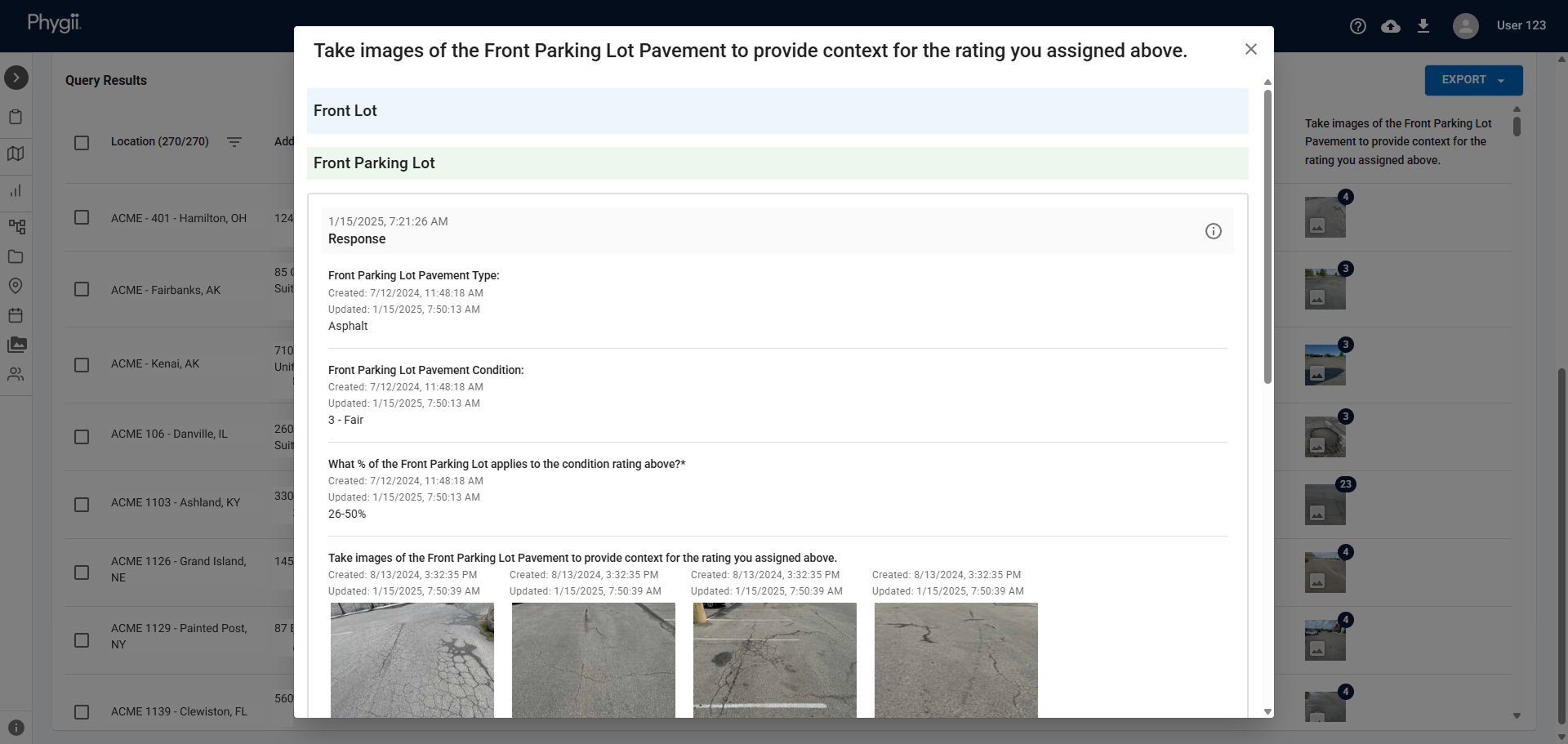
Phygii query tool detailed answer

What is a Facility Condition Assessment

A Facility Condition Assessment (FCA) is a structured, point-in-time evaluation of a property's physical condition. It establishes a baseline, identifies visible deficiencies and repair needs, and supports capital planning and acquisition due diligence.

For multi-site retailers, a common assessment framework makes findings comparable across locations. An FCA establishes condition at the time of assessment; Preventive/Predictive Maintenance uses asset information to guide maintenance, while Facility Health Monitoring tracks selected conditions across repeated captures.

What can a Facility Condition Assessment include

 Immersion Data Solutions configures each FCA around the building areas and assets you need to assess, the criteria for evaluating them, and the decisions the findings need to support.

Depending on scope, an FCA can include:

  • Roofs and building envelope
  • HVAC and mechanical equipment
  • Interior walls, floors, and ceilings
  • Exterior walls, storefronts, windows, and doors
  • Electrical equipment and panels
  • Restrooms and back-of-house areas
  • Parking lots and exterior site conditions
  • Lighting and plumbing
  • Signage, fixtures, and other specified assets

 Capture methods can include structured field observations, still photography, 360-degree imagery, drone capture, LiDAR, and other reality-capture methods appropriate to the program.

Document more than a condition rating 

Calling something "good," "fair," or "poor" is only useful if you know what the rating means and what is behind it.

Immersion Data Solutions establishes a consistent assessment framework for the program. Depending on scope, an observation can document:

Condition
How does the area or asset rate against the defined standard?
Extent
How much of it is affected?
Context
What did the field team observe?
Evidence
What imagery supports the finding?

Consider a roof. A poor condition rating identifies a concern. Documenting the affected area, describing the visible deficiencies, and linking supporting imagery gives the Facilities team a clearer baseline for evaluating repair scope and potential capital needs.

See where attention is needed, then understand why 

An individual FCA documents condition at one property at the time of assessment. A standardized multi-site program helps you compare findings across assessed locations using the same framework.

Immersion Data Solutions can structure findings by property, physical area, and asset category. A Facilities leader might start with an overall property condition, then investigate the parking lot, building perimeter, sales floor, or back of house. They can also compare asset categories such as lighting, flooring, doors, ceilings, or signage.

That creates a useful path through the information:

1
Portfolio
2
Property
3
Area or asset
4
Individual finding
5
Supporting evidence

Start with locations that warrant attention. See what is influencing their condition. Then drill into the underlying observations and visual evidence.

Instead of interpreting hundreds of separate reports, teams get a more consistent basis for deciding where to investigate and invest.

Bring actual conditions into capital planning 

 Asset age and maintenance history matter, but they don't establish the extent of visible deficiencies across a property. A structured assessment adds that physical evidence to the capital-planning conversation. 

 Use the FCA baseline to identify condition-driven needs and examine the findings behind them. 

 If an area receives a lower condition rating, for example, the assessment can also document how much of it is affected. Combined with known quantities, measurements, and the retailer's own cost assumptions, that information can help teams understand potential scope and evaluate expected spend. 

One Facilities leader we interviewed described using field observations to check whether planned lifecycle projects for roofs, HVAC, paint, lighting, and parking lots aligned with actual conditions. An FCA can provide a consistent assessment basis for those discussions. 

portfolio-map-1536x864

Establish a baseline for the decision in front of you 

01-know-what-needs-investment
Assess the existing portfolio

For an existing portfolio, scope an FCA as a defined assessment program to establish or renew a comparable condition baseline before a budget cycle or major investment decision.

Use standardized findings to identify properties that warrant attention, understand their visible deficiencies, document deferred needs, and support budget conversations. Subsequent targeted monitoring can revisit selected conditions without repeating the full assessment scope.

02-ahead-of-deterioration
Evaluate a new property

Before you acquire or lease a location, an FCA can document current conditions and visible deficiencies so Real Estate and Facilities teams better understand potential repair liabilities and deferred maintenance before making a commitment.

The same captured property information can also provide existing-condition context for future remodels, refreshes, or property transitions. Each initiative requires its own scope and deliverables.

Capture for the FCA and reuse for what comes next 

An FCA produces a structured condition assessment. Many physical facts collected onsite can also support maintenance programs, health monitoring, and decisions in other departments.

Facilities may need asset identity to prepare service work or baseline imagery for later condition checks. Construction may need measurements and existing-condition imagery. Store Planning may need fixtures and layouts. Real Estate may need the property record for a transaction.

When those needs are known, we can configure one visit to collect the required evidence. The data may overlap; the assessment criteria, reporting, and business purpose distinguish each initiative.

Phygii preserves captured information in the property's Phygital twin. Teams can reuse the record for maintenance decisions and reference it during later monitoring, with new capture where conditions or information needs have changed.

image-3-compressed-1

From field observation to portfolio understanding 

1

Capture

Immersion Data Solutions works with you to define the assessment scope and then collects required physical evidence using structured field observations and appropriate reality-capture methods.

2

Assess and organize

Field teams document conditions against the agreed framework. Findings can include condition, extent, context, and supporting imagery, organized by property, area, asset, and assessment question.

3

Compare and reuse

Standardized findings can roll up across assessed locations into a comparable condition baseline. Captured property information can also become part of the Phygital twin in Phygii for future maintenance, monitoring, and other initiatives.

What do you receive from a Facility Condition Assessment? 

We configure the assessment criteria, capture methods, and deliverables around the condition baseline your organization needs. Agreeing on these elements before capture makes the results useful for individual properties and comparable across the program.

Depending on the program, deliverables can include: 

Deliverable What it provides
Condition data and scorecards Standardized ratings for the assessed areas, systems, and assets at the time of assessment
Photo and visual evidence Verification and context behind findings
360 or drone imagery Broader interior or exterior context when included in scope
Property-level findings Visible deficiencies and repair needs documented at individual locations
Risk and issue documentation Structured documentation of identified issues when required
Portfolio roll-ups Comparison of condition across assessed locations using the agreed framework
Phygital twin in Phygii Captured physical information reusable for maintenance, monitoring, and future initiatives
Technical deliverables Drawings, measurements, models, or other specified outputs when included
What portfolio-scale FCA can look like

Turn hundreds of assessments into a capital planning view

One national multi-site retailer needed to understand facility conditions across hundreds of locations without asking its Facilities team to work through hundreds of individual reports.

Immersion Data Solutions worked with the retailer to define what should be assessed and how the findings should roll up. Field teams documented conditions across exterior and interior areas and individual asset categories. When conditions warranted attention, they could also document how much of an area or asset was affected and provide photographic evidence behind the rating.

We structured those observations so the retailer could evaluate condition by physical area and asset category, then roll the findings into property and portfolio views. The Facilities team could identify lower-scoring properties, understand what drove each result, and return to the evidence behind an individual finding.

The result: a comparable condition baseline that helped the team see where attention and capital may be needed across the assessed portfolio.

image-4-compressed (1)

Related resources

download (2) (1)
The 5 things your exec team doesn't understand about Facilities data
How stronger physical-condition information can support capital planning and deferred-maintenance conversations.
Read more

VisibilityAtScaleBlogImage
Visibility at scale how one Facilities team stopped chasing property information
See what changes when teams can return to consistent visual property information instead of repeatedly sending someone back to the site.
Read more
WhyLeadingAFacilitiesTeamFeelsReactive2-1
Why leading a Facilities team still feels reactive even with a preventive maintenance program
Explore how validated asset information complements service schedules and supports the maintenance work that follows an assessment.
Read more

Plan capital from a documented condition baseline 

Whether you're assessing an existing portfolio or evaluating a new property, Immersion Data Solutions can configure an FCA around the conditions you need to evaluate and the decisions ahead.

Establish consistent criteria, document visible deficiencies, and preserve the evidence behind each finding. Give your team a comparable view of property condition to support acquisition, repair-scope, and capital discussions. 

Frequently asked questions

What does a Facility Condition Assessment include?

Scope depends on the property and purpose. An FCA can include the building envelope, parking and exterior areas, HVAC, electrical equipment, lighting, plumbing, interior finishes, doors and windows, signage, fixtures, and other specified assets or systems.

We work with you to establish a consistent framework for the program. Depending on scope, observations can include a condition rating, extent of the affected area or asset, explanatory information, and supporting imagery.

Yes. We specialize in multi-site programs. Consistent assessment criteria allow individual findings to roll up into property and portfolio-level views.

How can FCA data support capital planning?

FCA data helps teams identify locations, areas, or assets that warrant attention and understand the physical evidence behind those findings. Capturing the extent of a condition can also help inform potential project scope.

No. An FCA can establish or renew the condition baseline for an existing portfolio, capital planning, deferred-maintenance review, or remodel preparation. It remains a defined assessment program, with scope and criteria suited to the decision.

Captured information can become part of the Phygital twin in Phygii. Preventive/Predictive Maintenance uses validated asset information alongside service history to guide work. Facility Health Monitoring revisits selected conditions over time. One visit can support multiple initiatives when the scope includes the evidence each requires.