













Phygii for Brand Leaders
Deliver the experience your customers expect from your brand
Make your brand vision a consistent reality across every store—and understand its impact on your business.
Every store shapes how customers experience your brand. From the entrance to the way customers navigate, shop, and interact with your space, the physical environment helps deliver—or undermine—the experience you've promised.
Across hundreds or thousands of locations, store conditions vary, standards drift, and remodels don't always translate from design intent to real-world execution.
Immersion Data Solutions helps Brand leaders understand how their brand comes to life across the portfolio, identify opportunities to improve the customer experience, and execute physical changes with confidence. Validated property data and portfolio-level intelligence in Phygii support better decisions about brand consistency, investment, and performance.
.png?width=650&height=650&name=4%20(1).png)
Locations captured in one banner's repeatable brand governance program
A demonstrated relationship between brand compliance and store revenue
Comparable evidence to identify and prioritize physical improvements
Findings that support corrective action across retail networks


Delivering a consistent brand experience depends on decisions made across Brand, Store Planning, Construction, Facilities, and Operations.
Brand leaders need to understand more than whether individual stores meet standards. They need to see how physical brand execution varies across the portfolio, where gaps may affect the customer experience, and how those differences relate to business performance.
Immersion Data Solutions makes that possible with validated property information and portfolio intelligence in Phygii.
Some stores reflect your newest concept. Others still have outdated fixtures, signage, or layouts. Physical conditions vary by market, format, and ownership model, while site-specific constraints can compromise remodel execution.
The information needed to understand those differences is often scattered across audits, field photos, drawings, spreadsheets, and departments.
You may know which stores were remodeled, but not whether they deliver the intended experience. You may have compliance scores, but lack the context to identify portfolio-wide patterns or understand their relationship to sales and customer satisfaction.
Without consistent, comparable information, it's difficult to know where to focus attention, which improvements to prioritize, or whether brand investments are delivering the intended results.
A store audit tells you whether a location meets selected standards. A portfolio-wide approach reveals patterns, priorities, and opportunities that individual assessments can miss.
Immersion Data Solutions captures and validates physical conditions, evaluates selected elements against defined requirements, and connects findings to visual evidence. Phygii makes that information accessible and reusable across locations and departments.
With consistent information across your portfolio, you can:
Brand & Store Experience Optimization
Evaluate customer-facing conditions against defined brand standards, compare findings across locations, and identify opportunities to improve the experience.
Standardized assessments and portfolio intelligence in Phygii help Brand leaders understand patterns, prioritize improvements, and examine how physical execution relates to business performance.
Remodel & Rollout Programs
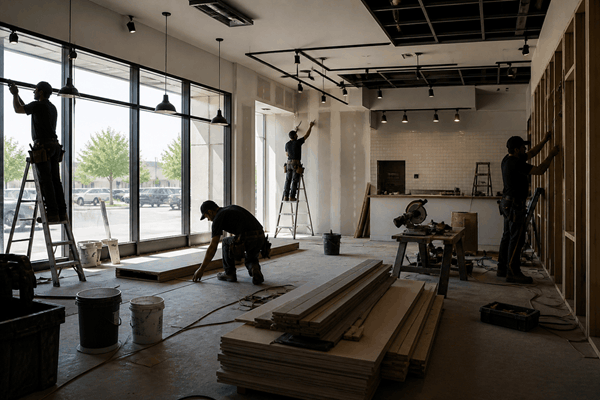
A rebrand or store refresh is an investment in the experience you want customers to have. Delivering it consistently requires understanding each property's conditions before work begins and verifying the result.
Immersion Data Solutions helps teams document existing conditions, identify constraints during construction planning, and evaluate completed work against intended requirements.
Standardized assessments and supporting visual evidence establish a comparable view of physical brand execution across locations, formats, and regions.
Portfolio findings help distinguish isolated exceptions from recurring problems. Combined with store performance, customer feedback, and investment priorities, they inform where improvements may have the greatest value.
Existing-condition information helps teams adapt designs to physical constraints before construction. Post-construction reviews verify completed work against defined requirements.
Physical brand assessment data provides a measurable baseline that retailers can analyze alongside their own sales, customer satisfaction, and other performance measures to investigate relationships and support investment decisions.
Compare execution across locations, formats, and markets rather than relying on isolated assessments.
Use defined criteria and visual evidence to make assessments more consistent and actionable.
Identify recurring issues and prioritize improvements using portfolio intelligence.
Understand site conditions before remodels and evaluate completed work against requirements.
Bring physical execution data into discussions about customer satisfaction, sales, and brand investment.
Immersion Data Solutions collects structured imagery, observations, measurements, and other information appropriate to your initiative. Existing information can also be incorporated when it meets program requirements.
Captured information is validated, organized, and connected to each location in Phygii, creating a structured record of imagery, layouts, assets, and documentation.
Structured assessments and portfolio analytics help teams compare locations, investigate exceptions, and prioritize action. New information can update the property record as stores change.
Capture once. Reuse everywhere.
A major telecom retailer needed to deliver a consistent customer experience across corporate and reseller locations. But subjective assessments made it difficult to compare brand execution or prioritize improvements.
Working with Immersion Data Solutions, the retailer standardized 170 assessment criteria and evaluated 1,100 locations in eight weeks.
Structured observations, visual evidence, and consistent scoring helped Brand Governance leaders compare locations, identify exceptions, and support corrective action. The program expanded to more than 5,200 locations captured in 2025.
The result is a repeatable operating program that supports brand consistency, accountability, and more informed business decisions.
The business insight: The retailer observed that stores achieving full brand compliance outperformed less-compliant locations in revenue, reinforcing the value of understanding how physical brand execution relates to commercial performance.

The customer experiences one brand, regardless of how responsibilities are divided internally.
Phygii gives these teams access to validated physical information so they can make decisions with a shared understanding of each property's reality.
Retail brand experience optimization involves evaluating and improving the physical store elements that shape how customers encounter a brand, including signage, fixtures, layouts, lighting, and finishes.
The physical environment influences how customers recognize, navigate, and interact with a store. Consistent execution helps retailers deliver a more recognizable and intentional experience across locations.
Traditional audits typically document findings for a particular assessment. Immersion Data Solutions combines structured assessments with reusable physical property information in Phygii, supporting portfolio analysis and future initiatives.
Brand assessments use defined criteria and documented observations. Phygii organizes the resulting evidence and findings; assessments do not depend on autonomous visual identification of violations.
No. Phygii complements existing systems with validated physical property information and assessment findings. Integrations depend on the agreed technical scope.