




Property Exit & Transition

Know what must stay, move, or change before you leave 

Prepare for a property sale, lease surrender, relocation, or closure with a clear understanding of the assets, conditions, and physical requirements involved. Immersion Data Solutions helps Real Estate and Facilities teams at retailers with 100+ locations define the work, support the handoff, and document the transition.

image-2-circle
Exit readiness  
Systems and service handoff 
 Restoration evidence 
 Environmental observations 
 Decommissioning records  

Trusted by leading multi-site operators

tractor-supply-co-400x200
Tractor Supply Co.
gap-inc-400x200
GAP INC.
davita-400x200
Davita Kidney Care

Immersion Data Solutions connects structured property capture, assessment, and technical deliverables with Phygii. Your team can use validated property information to prepare buyer materials, understand restoration needs, and review what transfers to another party. Phygii organizes that evidence in a reusable Phygital twin so each decision can draw on the relevant property record.

An exit decision creates work across the property 

Leaving a location creates financial and operational decisions well before the keys change hands. A lease deadline may be clear while the required restoration scope remains uncertain. A buyer may request building information that several teams hold in different files. Equipment scheduled for removal may also serve systems the next operator expects to inherit. 

Real Estate needs to manage the transaction, obligations, and landlord or buyer relationship. Facilities needs to understand equipment, condition, service responsibilities, and contractor work. Unresolved physical questions can change the budget or delay the agreed handoff. 

A property-exit survey establishes current conditions. Structuring the information for reuse helps teams answer related questions without separate discovery visits. Use the evidence before committing to exit work. 

01-store-cutaway

What property exit and transition insights does a retailer need 

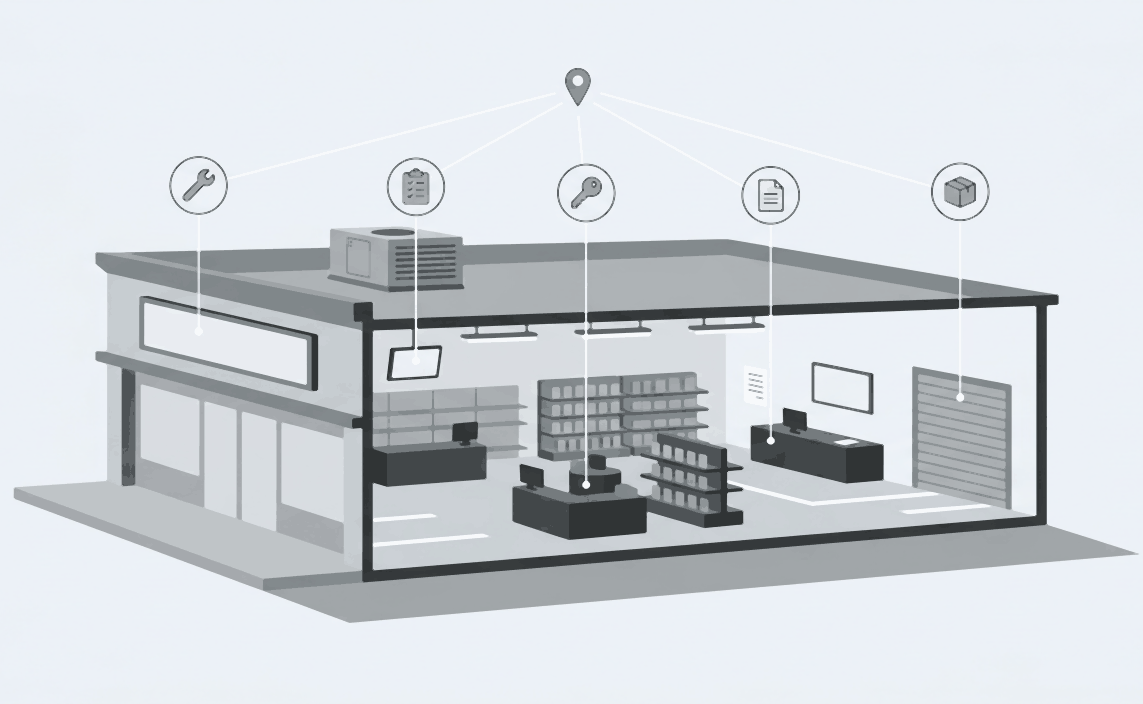
When a building changes hands, a retailer needs to know what assets and systems are present, what stays or goes, which physical requirements remain unresolved, and what information the next party needs. Property exit and transition insights connect those facts to decisions about restoration, environmental follow-up, asset disposition, and handoff. 

Validated property information helps Real Estate and Facilities define the work before committing resources, clarify what another party will inherit, and document the condition at turnover. The questions vary by transaction: a sale, lease surrender, or closure may require different evidence and actions. 

Define the scope before teams begin work 

 The capture scope follows the decisions your team needs to make. Depending on the property and transition, it can include:

  • Furniture, fixtures, equipment, and IT equipment included in the exit plan
  • HVAC, electrical, plumbing, and associated asset identification
  • Roofs, facades, paving, landscaping, and exterior areas
  • Interior finishes, signage, graphics, and brand elements
  • Mechanical rooms, storage areas, drainage, and waste-handling features
  • Agreed restoration areas and conditions before and after work
  • Maintenance records, service contracts, and client-defined handback requirements

Begin with visual inventory and site context. Add close-ups, nameplates, condition observations, or measurements where the decision requires more detail. Appropriate methods can include photography, 360 imagery, drone capture, and LiDAR. Engineering tests and environmental investigations require their own qualified scope.

Five initiatives address different transition decisions  

01-exit-asset-disposition-256
Exit & Asset Disposition: Establish the exit baseline

What is at the property, and what needs resolving before sale or handback?

Immersion Data Solutions documents remaining assets and visible site conditions, from fixtures and signage to the roof, facade, parking, and interiors. We connect evidence with the requirements your team provides so you can identify outstanding physical questions before presenting the property or finalizing exit work.

Inventory, condition findings, and an evidence-linked obligations checklist support decisions about what stays, moves, or needs attention. An exit-readiness summary can consolidate findings across assessed locations.

Asset disposition starts with knowing what is present and its observed condition. Your team determines ownership and whether an asset should transfer, relocate, or be disposed of. That information supports deliberate asset decisions; the decommissioning initiative records what happens when the approved plan is carried out.

02-mep-fm-transfer-256 (1)
MEP/FM Transfer: Clarify what the next party inherits

Which building systems and Facilities responsibilities transfer when the property changes hands?

Immersion Data Solutions documents mechanical, electrical, and plumbing systems, including rooftop units, electrical panels, lighting, water heaters, and plumbing fixtures. Asset imagery, nameplates, and condition observations help the receiving landlord, buyer, or operator understand the systems involved. Available maintenance records add context to the physical evidence.

A stay/remove matrix records the classifications your team approves. An FM responsibility matrix organizes relevant services and contracts, such as HVAC maintenance, landscaping, janitorial work, and pest control, around the agreed handoff.

The transfer report connects assets with ongoing responsibilities. Teams can clarify which systems remain, which leave with the brand, and which service arrangements need attention. Where operational performance matters, agree on verification beyond visual condition alone.

03-lease-obligation-restoration-256
Lease Obligation & Restoration: Define the physical handback work

How do current conditions compare with the agreed restoration and surrender requirements?

Immersion Data Solutions maps physical evidence to the requirements your team and advisers establish from the lease, restoration clauses, and landlord instructions. Capture can address required fixture removal, signage and graphics, patched surfaces, and the condition of walls, floors, ceilings, and lighting.

An evidence-linked obligations checklist and gap findings help your team identify work before handback. For example, removing a sign may leave mounting holes or unfinished surfaces. Documenting both the removal and the resulting condition helps Facilities define the remaining restoration scope.

Use findings to brief contractors and support landlord discussions, with follow-up capture after work. Real Estate, legal advisers, and the landlord determine contractual interpretation and acceptance; IDS provides the physical evidence for those decisions.

04-environmental-remediation-256
Environmental & Remediation: Surface questions for specialist review

Which visible conditions or known records need environmental attention before transition?

Immersion Data Solutions captures safe, non-invasive observations of relevant areas and features. These may include suspect materials, damaged containment, visible leaks or staining, storage tanks, drainage, and mechanical or waste-handling equipment. Prior environmental reports provide additional context when available.

Location-linked imagery and an observations log help your team explain concerns to qualified specialists and identify information gaps. A photograph of staining can show where investigation may be needed; it cannot establish whether soil or water is contaminated. Suspect building materials likewise require appropriate specialist assessment.

Phygii can organize the physical evidence alongside supplied environmental findings and remediation records. Your team can then incorporate specialist-defined work into the transition plan. Qualified consultants assess hazards and determine testing or remediation needs; appointed contractors perform remediation.

05-decommission-transition-256
Decommission & Transition: Document the completed work

What was removed, relocated, retained, or restored, and what remains at closeout?

Immersion Data Solutions establishes a baseline before decommissioning and documents agreed removals and restoration work. Scope can include furniture, fixtures, equipment, signage, and IT equipment, along with affected floors, walls, ceilings, and site infrastructure.

Pre/post imagery, a disposition log, and a transition checklist support review against the approved plan. Agreed in-process capture documents removals; client-supplied relocation records document destinations.

Contractors execute disconnection, removal, relocation, and restoration. IDS documents the physical evidence so Facilities can review completion, identify remaining work, and prepare the final turnover record. This initiative closes the loop between the intended disposition plan and the condition your team hands over.


Not sure which program to start with?

Tell us what is in front of you right now and we will help you scope the program that solves it first.

Bring Real Estate and Facilities together around the same evidence  

Shared physical information helps teams resolve questions that cross responsibilities. Real Estate may confirm that a landlord expects lighting to remain. Facilities can identify the fixtures involved, document their condition, and distinguish them from equipment scheduled for removal. Contractors can then work from a clearer scope.

Teams can return to the relevant asset or area for restoration discussions and buyer requests, working from a trusted understanding of site-level reality.

02-laptop-gym-layout-3
03-monitor-dashboard-1

Make multiple exits a repeatable program  

Consistent capture and reporting help retailers execute closure, relocation, or disposition programs across multiple properties. Establish common information requirements and assessment criteria while preserving the obligations specific to each location.

Standardized findings can roll up across assessed properties so leaders can compare documented readiness, investigate outstanding issues, and understand the evidence behind them. A property with unresolved signage restoration presents a different next step from one awaiting environmental specialist findings.

Teams use those distinctions to coordinate follow-up, spending, and assignments.

Reuse the property record through the final handoff  

Information captured for an FCA, remodel, or maintenance initiative may identify systems, show layouts, or provide exit-planning context.

Capture once, reuse everywhere means checking whether existing information suits the next decision. Review its date, coverage, and relevance, then add capture where conditions have changed or the transition requires new evidence.

Exit documentation creates a dated record of baseline and final conditions for reference after responsibility changes.

04-meeting-map

From exit requirements to a usable handoff record  

1

Align on the transition 

Define the business event, stakeholders, required outputs, and client-approved obligations. Identify where specialists or contractors need to contribute. 

2

Capture and validate. 

Collect the agreed physical evidence and review supporting records. Plan access before removal and after restoration when the scope requires both. 

3

Organize and deliver

Structure assets, observations, and imagery in Phygii and prepare the agreed reports. Your team uses the findings to scope work, review completion, and support handoff.

What your team receives  

Deliverables depend on the selected initiatives and agreed scope. 

Deliverable What it helps your team do
Exit inventory and condition findings Prepare transaction information and identify unresolved physical questions
MEP/FM transfer report and matrices Clarify system disposition and ongoing service responsibilities
Environmental observations log and imagery Explain observations
Disposition log and pre/post evidence Review removal, relocation records, restoration, and final conditions
Property summaries and program roll-ups Compare assessed locations and investigate outstanding items
Phygital twin in Phygii Find supporting evidence and reuse suitable property information

Fitness Club made building information available to buyers  

 When a fitness club operator decided to relocate and sell several fitness clubs during the pandemic, buyers needed detailed building information. Historical documentation was incomplete or difficult to find, creating additional questions, site visits, and due-diligence friction. 

 Immersion Data Solutions captured the buildings and created Phygital twins, organizing key building information so buyers could review it remotely. The operator could share a link to the property record rather than assemble information separately for each request. 

 The example illustrates exit readiness: give the receiving party useful evidence about the property it is evaluating. 

08-before-after-screens-1

Related initiatives 

Property Due Diligence & Site Readiness
Evaluate what your organization would take on before committing to a replacement or new property.
Facility Condition Assessment
Establish a broader condition baseline when repair needs require assessment beyond the exit scope.
Capital Planning & Asset Modernization
Evaluate investment in properties your organization plans to continue operating.

Discuss your next property transition 

Bring us the business event, the properties involved, and the questions your team needs to resolve. We can define the relevant initiatives, evidence, and deliverables to support the exit work and handoff ahead.

Frequently asked questions

Do we need all five initiatives for every exit?

No. A sale may center on exit readiness and building-system handoff. A lease surrender may require restoration evidence and decommissioning records. Environmental concerns may require a separate workstream. Scope follows the transaction, physical conditions, and requirements involved.

An FCA establishes property condition and repair needs for acquisition or ongoing planning. Property Exit & Transition uses physical information to answer questions about a specific departure or change in responsibility, including asset disposition, restoration, transfer, and closeout.

Your team and legal advisers interpret the lease and establish requirements. Immersion Data Solutions documents physical conditions against those agreed requirements and provides evidence-linked findings to support restoration planning and handback review.

Yes. Inventory and condition evidence help your team decide what stays, moves, or is disposed of. Approved classifications can inform transfer matrices and disposition logs. Your organization determines ownership and disposition; contractors perform the physical work.

What MEP and FM information can support a handoff?

Relevant information can include HVAC, electrical, and plumbing inventories, nameplates, condition imagery, available maintenance records, and agreed stay/remove classifications. An FM responsibility matrix can organize service and contract information for the receiving party. Scope depends on the systems and responsibilities involved.

Yes, when it is sufficiently current and covers the decision. Existing imagery, asset records, and measurements may support exit planning. Review dates and coverage, then add capture for changed conditions, missing detail, or final handoff evidence.

Yes. Common capture standards, assessment criteria, and deliverables help teams compare assessed locations while retaining site-specific requirements. Phygii organizes the underlying evidence, and agreed program reporting can summarize findings across participating properties.

We provide safe visual capture and organize observations and supplied environmental records. Qualified specialists assess hazards, perform testing, and determine remediation requirements. Appointed contractors carry out remediation. Visual evidence supports follow-up but does not establish environmental clearance.