
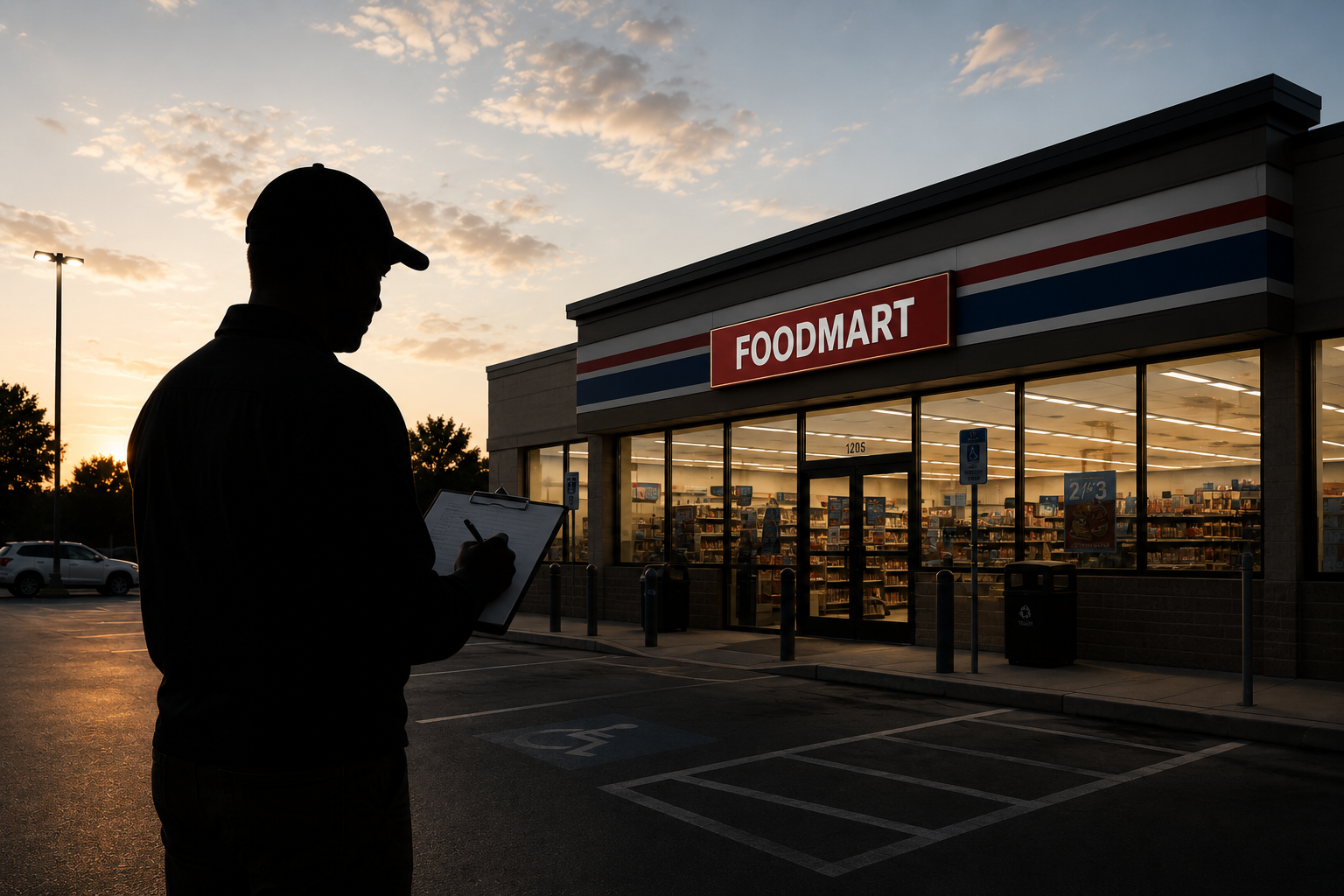
A store in your remodel pipeline was captured 18 months ago. The data you need probably exists somewhere. Some of it’s in a PDF, some is buried in a shared drive folder, and there’s maybe a set of drawings your architect produced for a different project two years back. But when planning starts in earnest, someone on your team says the inevitable: "I don't know if I trust what we have."
So you send someone back to the site. Two employees, a contractor on-site, an architect or building engineer to verify conditions. The visit happens, the data gets updated, and planning moves forward. Nobody flags it as a problem. It goes into the project budget as a cost of doing business.
Except it is not a cost of doing business. It's a cost of not having a foundation that travels with you across a portfolio, and it compounds fast.
The costs everyone can see
Factoring in travel for two people, contractor time, and professional services such as an architect or building engineer, a single re-survey visit can easily run thousands of dollars per store.
That number absorbs easily when you're looking at one store. It becomes a different conversation when you multiply it across a remodel program. If your team touches 60 stores more than once in pre-construction, the redundant spend clears half a million dollars before a single wall opens.
The costs nobody tracks
The $8,000 site visit is the line item. What doesn't appear on any budget report is everything that breaks downstream of the re-survey.
Planning stalls while the team waits for verified conditions. Architects hold drawings because they aren't confident in the existing documentation. Crew availability windows open before the documents are ready, and the schedule slips. Then the GC arrives and finds something the re-survey still didn't capture. That might be a structural element in the wrong position, rooftop equipment nobody documented, a wall configuration that rewrites the scope. That discovery produces a change order. And change orders in retail construction rarely arrive alone.
"What we hear about time and again is that teams are having to go back to the same stores because the data they have wasn't built to travel forward," said Jack Loukusa, Solution Consultant at Immersion Data Solutions. "It was captured for one initiative at one point in time, and nobody structured it for reuse. So they had to start the next project from scratch and send someone back to survey or take photos again."
Two triggers that send teams back
Most re-surveys trace back to one of two situations.
The first is a trust problem. The data exists, but it is old, fragmented, or narrowly scoped, so the team can’t build on it with confidence. Conditions or equipment may have changed. Landlords may have modified the space. Existing files become a starting point for doubt rather than a foundation for decisions. In that case, the path of least resistance is another site visit.
The second is a field mismatch. A vendor or contractor arrives at the store and discovers that what the documentation showed doesn't match what's actually there. Dimensions are off. A system isn't where the drawing says it is. The visit your team planned as execution turns into discovery, and planning restarts.
Both situations feel like operational failures. They are actually structural. Data captured for a specific project doesn't survive to serve the next one.
"The re-survey problem isn't a people or a process problem; it's a data architecture problem," said Tia Kachman, COO of Immersion Data Solutions. "When teams capture site data for one initiative rather than for the portfolio, every project has to rediscover the same physical reality. The cost compounds quietly. Most Construction leaders don't see the full cost of gathering site data until they stop and do the math."
What this adds up to across a program
Consider a mid-size retailer running 80 remodels a year. If the majority of those sites require more than one pre-construction visit, the redundant cost becomes a recoverable budget line, not an inevitable one.
That reframe matters. Re-survey cost isn't the price of doing construction at scale. It's the price of not having a reusable property data foundation. Those are different problems with different solutions.
There's a different way to structure this
When teams capture site data once and structure it for reuse, the next project doesn't start with a question mark. It starts from validated reality.
That's the premise behind Phygii. Each location becomes a Phygital twin: a validated, time-aware representation of the physical site that carries forward across projects, programs, and teams. Construction can plan from accurate existing conditions. Architects work from real documentation rather than field estimates. When a store comes up in the next wave of the remodel program, the baseline is already there and already trusted.
Clients who have made this structural shift report up to a 60% reduction in site visits and up to an 80% reduction in per-site planning costs, according to Immersion Data Solutions client data. Re-surveys don't disappear entirely. Conditions do change and some situations require a fresh look, but they become the exception rather than the reflex.
"The teams that stop paying for the same information twice haven't done anything complicated," said Kachman. "They've made a decision to capture site reality in a way that compounds in value instead of expiring after one project. Everything else, like better planning, fewer surprises, more predictable delivery, builds on that foundation."
Watch a 90-second Phygii demo and see how Immersion Data Solutions helps Construction teams build a property data foundation that travels with every project, and stops sending teams back to the same stores.