
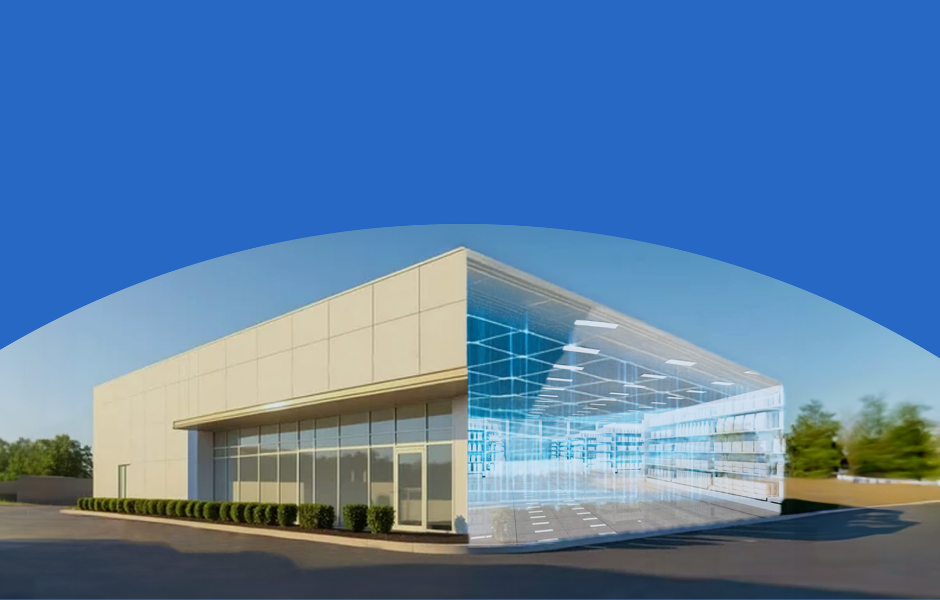
If you lead Construction, Facilities, or Brand for a multi‑location retail portfolio, you’ve probably ordered your share of store surveys.
3D scans, virtual walkthroughs, BIM, and VR have transformed how teams document and visualize stores. But there’s a growing gap between what you get in a store survey and what retail leaders need as competition increases and margins tighten: not just a snapshot of a single store, but a living, decision-ready view of the entire portfolio that lets you spot risks and make better plans and decisions.
That’s where Phygital twins come in.
Phygital twins are the backbone of Retail Property Optimization (RPO), a portfolio‑wide approach that turns fragmented site data into a single source of truth for every team, across every phase of the property lifecycle.
In this article, we’ll break down:
- What traditional surveys and digital twins are and where they fall short for retail
- What makes a Phygital twin different
- How Construction, Facilities, Store Planning, Brand and other teams benefit
- When to use each and how to move from “digital” to truly “Phygital”
What most people mean by “digital twin”
Store surveys are common in retail. Some survey providers promise a digital twin, usually referring to a visual replica of a physical store:
- Created from 3D scans, panoramic imagery, or lidar
- Hosted in a viewer you can “walk through” virtually
- Often used for documenting existing conditions, sharing with vendors, or supporting design and construction workflows
These tools are excellent at:
- Speeding up conditions assessment and documentation
- Reducing the need for early site visits
- Supporting conceptual design and vendor estimating
- Improving collaboration with remote teams and partners
In other words, digital twins are strong on visualization and access to a single site.
But they’re usually project‑bound and file‑heavy, meaning they lack the true depth needed for making multi-property decisions.
- Each initiative (a remodel, a maintenance, or a rebrand program) gets its own surveys and deliverables
- Those images and reports often live in separate systems, folders, or links
- When the next initiative comes along, teams repeat captures, rebuild context, and re‑estimate from scratch
You get pockets of important data but not a continuously usable, complete view of each location.
What is a Phygital twin?
Phygii users access Phygital twins, which are different from these static twins.
A Phygital twin is composed of the physical context and digital structure you need to understand a property:
- Physical context
- High‑fidelity, reality-based capture: coordinated LiDAR scanning, aerial drone mapping, panoramic imagery, and structured 3DVR walkthrough documentation
- Accurate, as‑built representation of each store - from parking lot to in‑store signage
- Digital structure
- Certified CAD/BIM, asset tags, classifications, and relationships
- Consistent data models across the entire portfolio, not just one or two flagship sites
Because the Phygital twin is built for the Phygii platform, it allows for structured data intelligence. That includes:
-
- Complete, initiative‑ready attributes like conditions, compliance status, asset criticality, brand standards, risk flags, and more
- Analytics and AI that surface patterns, prioritize sites, and answer portfolio‑level questions in seconds and from one source, not after months of hunting down information from multiple systems
Crucially, Phygital twins are complete and continuously reused:
- You capture location information once and use it for making better decisions at every stage of the property lifecycle
- Every team (Construction, Facilities, Brand, Real Estate, Store Planning) works from the same living, trusted source of truth
- Contractors and other vendors can write bids, pull measurements, and verify conditions without revisiting the sites
- New initiatives add layers of intelligence to the same twin, instead of spinning up disconnected projects
Phygital twins take you from static digital files to a consistent, living picture of your properties.
The practical differences between store surveys and Phygital twins
Here’s how this shows up in the day-to-day work of retail leaders.
1. Scope
- Store surveys: One store or small group of sites, typically tied to a single initiative and living in flat, disconnected files
- Phygital twin: All properties visible and comparable using uniform data stored in one system
2. Lifespan
- Surveys: Useful for the function or project that commissioned the capture
- Phygital twin: Continuously refreshed and reused across years of programs and budgets
3. Depth of data
- Surveys: Visuals + measurements
- Phygital twin: Visuals + structure + business logic. Data on conditions, codes, brand standards, asset attributes, and initiative‑specific data fields
4. Questions you can answer
With a store survey, you can ask:
- “What does this store look like?”
- “Can the General Contractor see existing conditions before they price this work?”
With a Phygital twin, you can ask those questions plus:
- “Across 1,000 stores, which 200 should we remodel first to maximize revenue uplift?”
- “Which roofs, parking lots, or MEP systems pose the highest near‑term risk?”
- “Where do we have brand, ADA, or safety compliance gaps—and what’s the smartest sequencing to close them?”
What this means for Construction, Facilities, and Brand
For Construction: Faster, clearer programs at scale
Construction leaders are judged on speed, predictability, and cost control. A Phygital twin directly supports that by:
- Eliminating repeat site visits and duplicated assessments. Some Phygii clients have cut planning costs by up to 80%
- Providing accurate, reusable as‑built conditions that GCs, architects, and internal teams can trust
- Letting you sequence hundreds of projects based on real readiness and risk instead of guesswork
“With a traditional store survey, you still see a lot of surprises once a project hits the field, and that’s when schedules slip,” says Tia Kachman, COO at Immersion Data Solutions.
“When we move a client to a Phygital twin, bids come in tighter, RFIs drop, and schedules hold because everyone is working from the same, trusted picture of each site. It doesn’t just make planning more efficient; it materially reduces bid risk and rework across the program,” she says.
For Facilities: A proactive view of risk and lifecycle
Facilities teams keep stores open, safe, compliant, and on budget.
Phygital twins help them by:
- Flagging assets and conditions that are likely to fail or cause disruption
- Centralizing inspection, work history, and condition assessments in one place
- Making it easy to compare sites, prioritize maintenance, and avoid “surprise” capital hits
Instead of reacting to the next emergency, Facilities can use the same Phygital twin to model “what‑if” scenarios and negotiate budgets with hard evidence.
“Facilities leaders tell us the Phygital twin lets them get ahead of the fires instead of just chasing them. It’s having one, trusted picture they can use to defend budgets, prioritize capital, and prove they’re reducing risk, not just reacting,” says Nick Bonko, account executive, Immersion Data Solutions.
For Brand: Consistency you can measure
Brand leaders are responsible for how the portfolio feels, inside and out.
With a Phygital twin, Brand can:
- Audit brand standards across hundreds of locations without leaving the office
- See where new concepts will actually fit and what they will replace
- Partner with Store Planning, Construction and Facilities on one set of facts, not three different versions of reality
“We helped a client build standardized brand compliance criteria, visual references, and a single playbook that made every store comparable. They assessed 1,100 locations in eight weeks, moved average compliance from the low‑70s into the mid‑90s, and did it with one Brand owner instead of a small team. Smart capture makes a big difference,” says Immersion Data Solutions Account Executive, Sam Goodman.
When is a traditional survey enough?
Store surveys are still incredibly useful—especially when:
- You’re piloting new concepts in a handful of stores
- You need a fast, visual way to share conditions with external partners
- Your portfolio is small, and you don’t yet feel the pain of repeat visits and disconnected data
If your primary question is “What does this space look like, and how big is it?”, a survey is usually enough.
When it’s time to go Phygital
You know you’re crossing into Phygital twin territory when your questions sound like:
- “How do I efficiently plan for remodels of all our storesin the next three years?”
- “How do I eliminate rework orders and surprises in my fixture inventory?”
- “How do I see this entire portfolio as one system, not a folder of one‑off projects?”
- “How do we stop paying to capture the same stores again and again for different teams?”
- “How can Construction, Facilities, and Brand share a single, trusted view and still see what we all care about?”
That’s where a platform like Phygii comes in. It creates and maintains Phygital twins across the full portfolio, then layers on analytics and AI to help you make better decisions.
The result is real, measurable impact through:
- Faster project starts and shorter timelines
- Lower per‑site planning and travel costs
- Less downtime per site
- Clearer, more defensible capital allocation
The bottom line for retail property leaders
- Store surveys and digital twins are important tools for site‑level visibility
- Phygital twins take the next step by connecting physical context, digital structure, and data intelligence into a living, portfolio‑wide system you can run the business on
If you’re feeling the strain of continuous remodel waves, fragmented data, and competing priorities between Construction, Facilities, and Brand, it may be time to move from “digital” to truly “Phygital.”
That’s the shift Phygii is built to deliver.