Technology & Connectivity Readiness
Know whether your stores are ready for the technology you plan to deploy
A digital retail strategy eventually has to work in a physical store.
Immersion Data Solutions helps retailers assess the physical and connectivity conditions that technology depends on, from Wi-Fi coverage and IT closets to cabling, PoE, checkout infrastructure, and power. Apply a consistent readiness standard across locations, identify gaps before deployment, and give property and technology teams the evidence they need to plan what comes next.

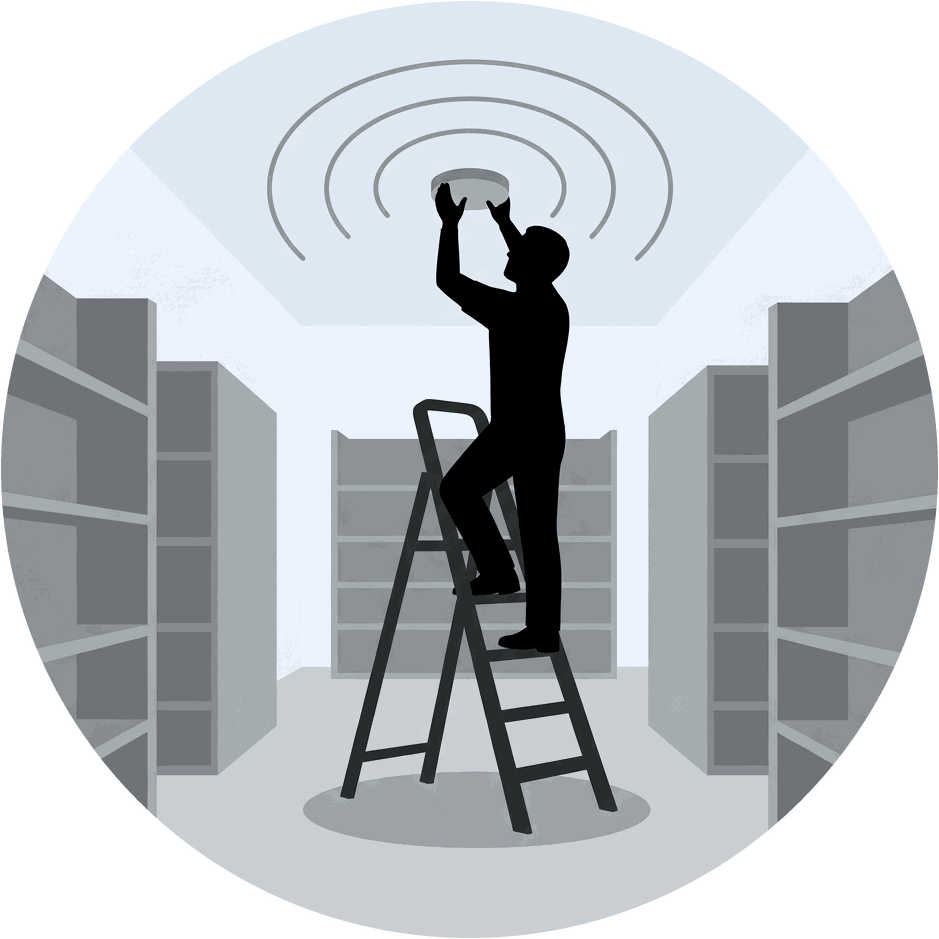
You can select the same technology, define the same standards, and create the same rollout plan for hundreds of locations. But the physical environments where that technology has to work can vary significantly.
Wi-Fi coverage, IT closet capacity, cabling, POS infrastructure, power, pathways, equipment locations, mounting conditions, and available space can all vary from site to site.
When teams discover those differences after a rollout begins, the result can be another site visit, a revised installation plan, additional remediation, or a location that simply is not ready when the deployment team arrives.
Technology & Connectivity Readiness establishes what is actually present, tests the conditions that matter to the planned deployment, and identifies what needs attention before execution depends on it.
.png?width=910&height=718&name=Split-Scene%20Store%20Sensor%20Comparison%20(1).png)
Immersion Data Solutions works with your team to define the readiness rubric for the program: what needs to be documented, what needs to be tested, and what standards determine whether a location is ready.
The scope can match your initiative and needs. A Wi-Fi upgrade may require detailed coverage measurements and heatmaps. A POS rollout may emphasize lane configuration, cabling, power, and connectivity. A connected-device program may focus on PoE, mounting conditions, pathways, and equipment locations.
Depending on the program, that can include:
| Readiness area | What we can assess |
|---|---|
| Wi-Fi coverage and performance | Access point locations, RSSI and throughput measurements, coverage across critical areas, and coverage maps or heatmaps |
| IT closets and cabling | Racks, patch panels, switches, labeling, cable management, available ports, PoE, UPS presence and status, and physical condition |
| POS and checkout | Device presence, power and network connections, cabling and routing, equipment condition, and lane-level readiness |
| Physical deployment conditions | Equipment locations, layouts, dimensions, mounting locations, ceiling and above-ceiling conditions, pathways, available space, and other site constraints |
| Additional testing when required | Cable certification and UPS runtime testing can be included when the program calls for a higher level of validation |
Immersion Data Solutions applies the agreed readiness rubric consistently across locations. Each assessment produces evidence tied to the criteria being evaluated, including measurements, photos, 360 imagery, equipment information, annotated plans, coverage maps, and documented deficiencies.
Results can roll into a Technology & Connectivity Readiness Score with relevant sub-scores for the program. A deficiency and remediation punchlist identifies where a site falls short of the defined standard and what requires attention.
For a multi-site rollout, teams can answer practical questions:
Is this location ready for what we plan to deploy? If not, what needs to happen first?
That helps identify locations ready to proceed and those that require remediation or further investigation before schedules, vendors, and capital are committed.
Technology readiness crosses organizational boundaries.
IT may define the technology and technical requirements. Facilities may know existing equipment and physical constraints. Construction may understand pathways and above-ceiling conditions. Real Estate may hold plans and property documentation.
Technology & Connectivity Readiness creates a common evidence base across those teams.
Immersion Data Solutions captures the required information using a consistent program specification. Phygii organizes it around the property so teams can review relevant assets and conditions, supporting evidence, and readiness findings.
Phygii does not replace the retailer's network, IT, facilities, or project-management systems. It adds validated physical property information to the systems and expertise those teams already use.
.png?width=925&height=784&name=3-compressed%20(1).png)
Technology & Connectivity Readiness and MEP Capacity & Readiness can overlap around electrical infrastructure, but they answer different questions.
Technology readiness can document power availability, outlets, UPS systems, cabling, PoE, pathways, and other conditions relevant to deployment. If a finding raises deeper questions about electrical capacity, building-system configuration, engineering calculations, or other MEP constraints, MEP Capacity & Readiness provides the appropriate next level of investigation.
A location captured for a remodel may already have current layouts, measurements, equipment locations, ceiling conditions, electrical information, or 360 imagery. An FCA or MEP assessment may have documented infrastructure relevant to a later technology program.
When that information is suitable and current, teams can reference it instead of starting every initiative by rediscovering the property.
Technology & Connectivity Readiness adds to that record. Equipment locations, IT closets, connectivity infrastructure, imagery, measurements, and other validated physical information remain connected to the location in Phygii for future use.
New questions will sometimes require new capture or testing. But every initiative does not have to start from zero.
.png?width=1365&height=784&name=Surveying%20Camera%20with%20Document%20Projections%20(1).png)
.png?width=1360&height=784&name=5-compressed%20(1).png)
New checkout experiences, digital displays, connected equipment, sensors, wireless devices, and other technology introduce requirements for connectivity, power, cabling, space, mounting, and infrastructure.
Technology & Connectivity Readiness gives retailers a repeatable way to evaluate those requirements against actual store conditions.
The rubric can change as the initiative changes. The approach remains consistent: define what ready means, collect the evidence required to evaluate it, identify gaps, and preserve what you learn for future use.
Depending on program scope:
Immersion Data Solutions helps you establish a consistent readiness standard, assess actual site conditions, identify gaps, and preserve what you learn in Phygii for the next initiative.
It evaluates whether the physical and connectivity conditions at a location meet the requirements of a planned technology initiative. Immersion Data Solutions works with the retailer to define the readiness rubric, captures and tests the required conditions, and identifies deficiencies to address before deployment.
Depending on scope, we can document technology equipment, IT closets, cabling, ports, PoE, UPS systems, POS equipment, power and network connections, layouts, pathways, mounting conditions, and other physical infrastructure. Testing can include RSSI, Wi-Fi coverage and throughput, heatmaps, PoE/port checks, and optional cable certification and UPS runtime testing.
Yes. A program can include RSSI and throughput testing across defined areas, with sampled coverage maps or instrumented heatmaps depending on scope. This establishes readiness against defined criteria; it is not ongoing network monitoring.
Technology & Connectivity Readiness evaluates conditions required for a technology deployment, such as connectivity, cabling, PoE, IT closets, checkout infrastructure, and physical constraints. MEP Capacity & Readiness goes deeper into whether building systems can support an intended use, change, or investment.
Yes, when it is suitable and current. Layouts, imagery, equipment information, electrical documentation, or other conditions captured for previous initiatives may answer some readiness questions. Teams can then identify what additional capture or testing the technology program requires.
We can document specified accessibility features, capture measurements and visual evidence where appropriate, and identify potential concerns against defined criteria. Formal ADA or other legal compliance determinations may require review by qualified professionals.
Yes. Using consistent assessment criteria allows findings to roll up across properties, helping teams compare locations, identify recurring concerns, and understand where attention may be concentrated.
When repeat assessments or refreshed captures are available, Phygii can preserve time-stamped evidence so teams can reference prior conditions and compare them with newer information. The available history depends on when and how each property has been captured.